Reflection 2: AI in the classroom
Although I do think AI can be useful for getting started on projects and saving time on bigger tasks by creating summaries of longer texts or creating outlines for projects, I have become fairly concerned about misinformation and AI dependence, especially among youth. For this reflection, I am going to test out Notebook IM to create a summary and review how accurate and detailed the summary is.
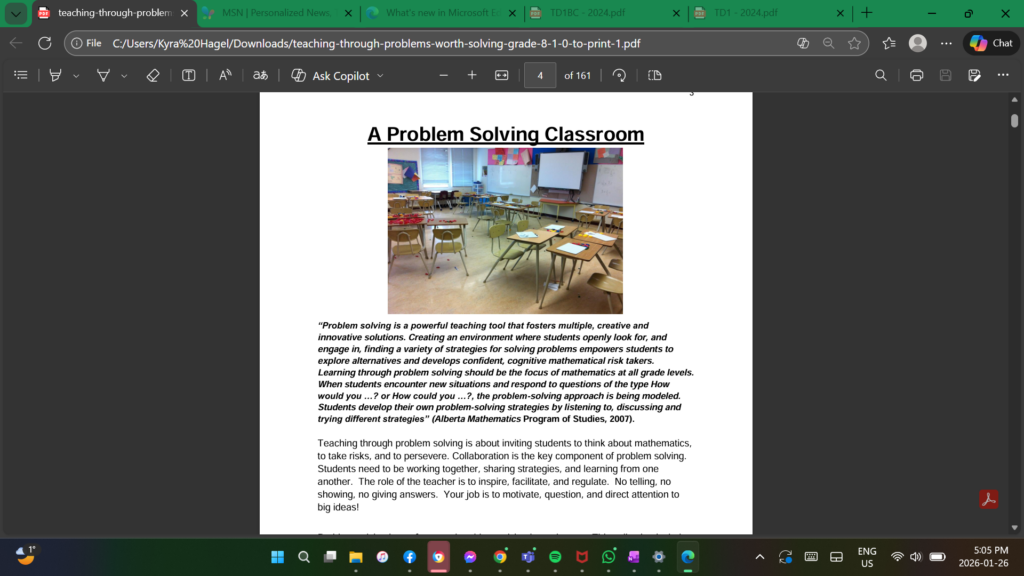
This week, I tested out Notebook IM on a text that I read last semester for my math education course. The text discusses “problems worth solving” in the classroom and promotes posing open-ended questions with multiple entry points and possible solutions for students. It suggests various ways to engage students in the problem-solving process and lead them toward deeper learning. It also provides various “low-floor, high-ceiling” problems to use in a classroom.
The following is a screenshot of a brief summary provided by Notebook LM:
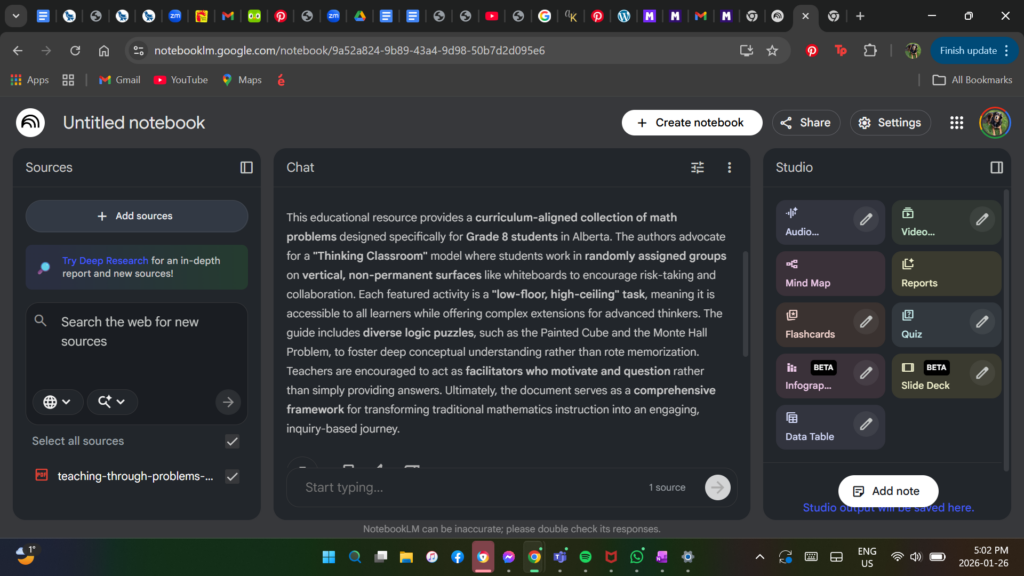
The summary is accurate, though fairly generalized. Notebook LM also created specific questions about the text and provided answers from the information in the original text.
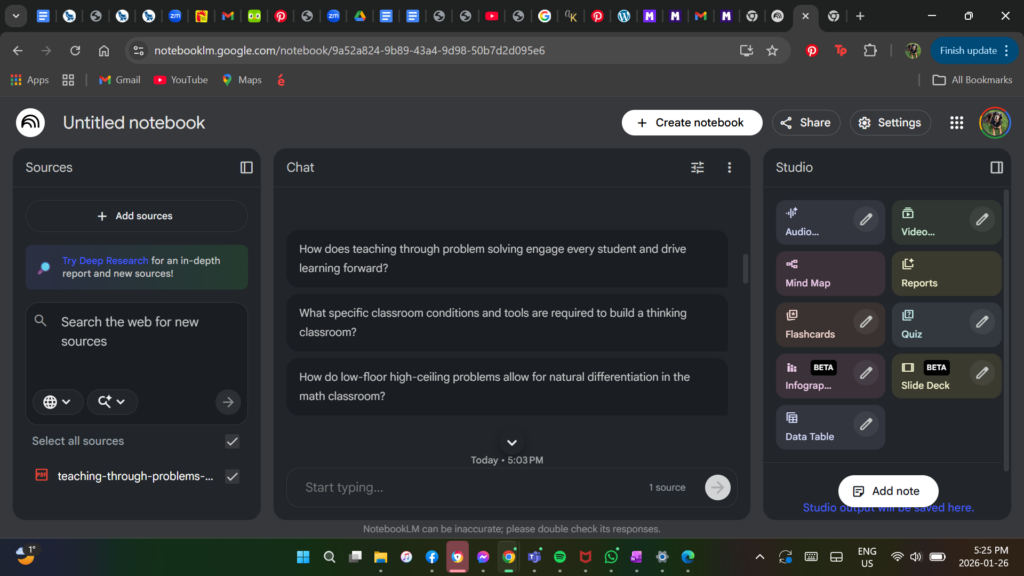
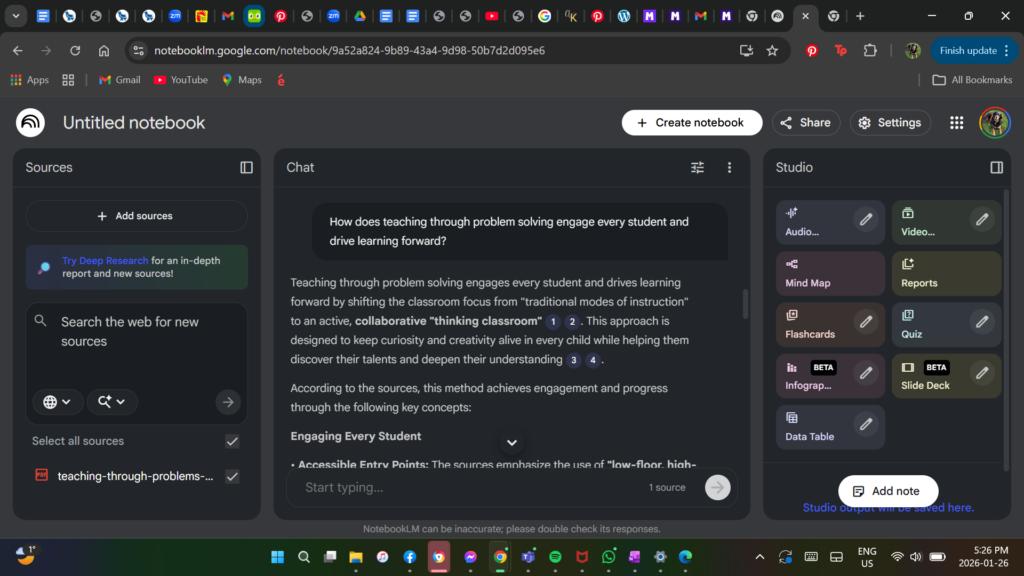
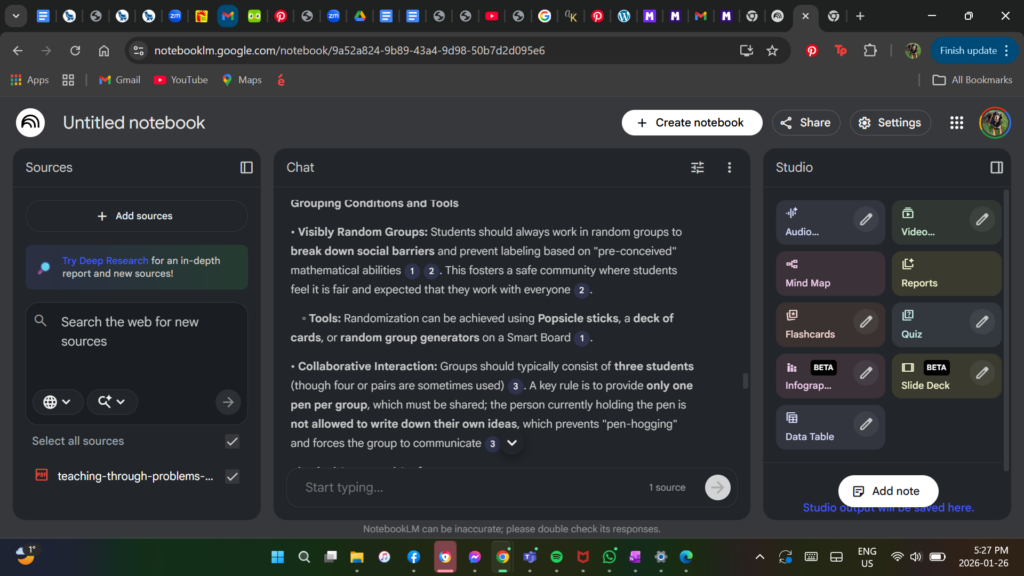
The answers provide a good basic understanding of the text and I have not caught any details that are not found in the original text. This is definitely a good tool for helping you find the core details of a text if you are short on time or in the beginning stages of research and trying to find out if a text is worth reading in full.
My only concern with this tool is that it made a text that is originally 161 pages into only a few paragraphs, meaning that nearly all of the supporting details are removed. When you read the summary, you do not get to look at the example problems they suggest or the justification behind their propositions. It does not provide any examples of what the problems within the text look like or refer to specific pages in the text to read more on a certain point. I worry that it will prevent students from learning how to look for important information when it is not handed to them. If students only see the essential details, they may not learn how to differentiate between what is central to a text and what are supporting details. I noticed in my grade 8 Link2Practice class, that when asked to highlight important details in a text, most students highlighted the majority of the text; many students highlighted entire paragraphs. Although students will generally have access to AI outside of the classroom, I do feel that it is important to understand for yourself what information is pertinent to the message of a text.