Language Learning Tech in SD 61: Yabla and Duolingo.
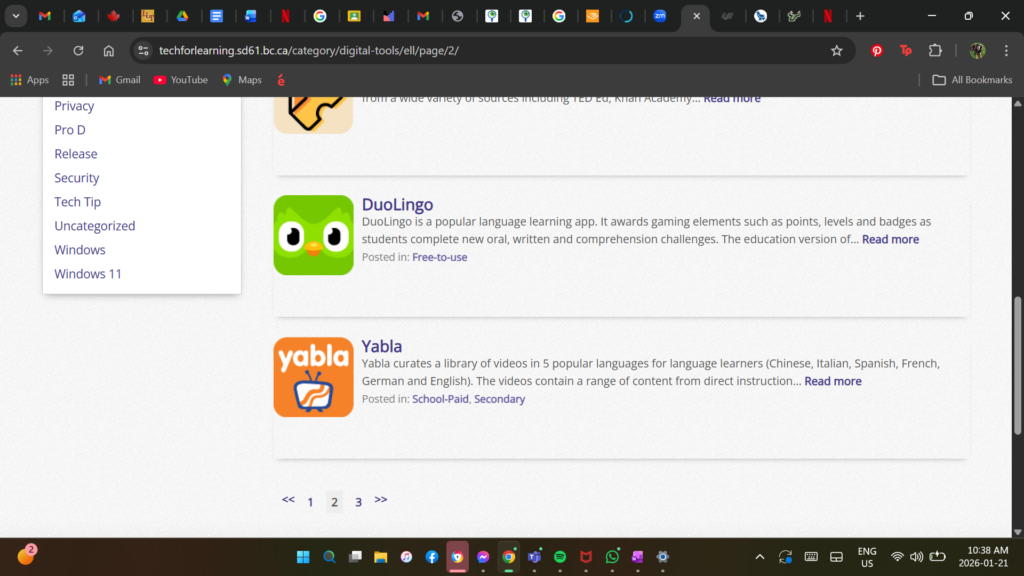
For my free-inquiry project, I will be investigating and comparing the effectiveness of various online language-learning tools, particularly Yabla and Duolingo, although I may explore other apps such as Memrise for comparison. Although I intend to explore the language learning tools for my French immersion classroom, I will be testing the tools by learning Italian, given that I already speak English, French, and Spanish.
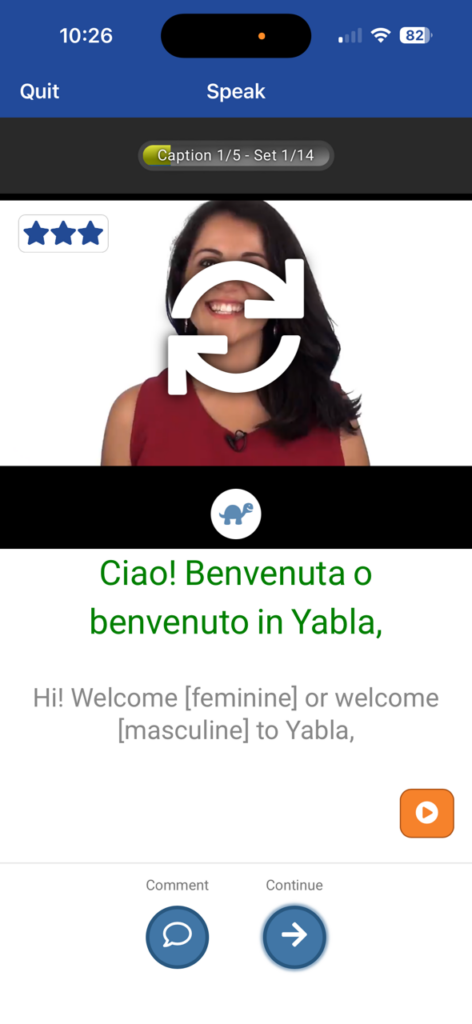
According to the SD 61 district website, the two language learning tools used by the district are Yabla and Duolingo. Yabla is a language-learning app with videos, movies, music videos, and more, all with multilingual subtitles (English and the language you are learning). When you select a video, there are games, speaking tools, and practice sets to help you learn the key vocabulary used in the video. Only select content is available for free, but the district does pay for a premium account that gives teachers open access to all content in the Yabla app. The app has similarities to Duolingo, but it takes a more immersive, less gamified approach. The app does track when you get answers right or wrong, but it does not assign gems or remove “practice energy” like in Duolingo. One real benefit of Yabla is that you can practice and repeat answers as much as you like, unlike Duolingo, which gives you a set number of incorrect answers per day in the free version. Yabla also uses real people and voices to teach you the language, whereas Duolingo uses AI bots. It also lets you explore specific themes, like ordering a coffee or taking a taxi (in the premium version). Unfortunately, I do not have access to the premium version, so I am limited to what I can test, but so far it does seem like a more immersive and practical language-learning tool than Duolingo.
Duolingo uses a gaming format with gems, XP, streaks, and battery life to encourage participation and engagement. It is also a social platform where you can connect and compete against friends or family.
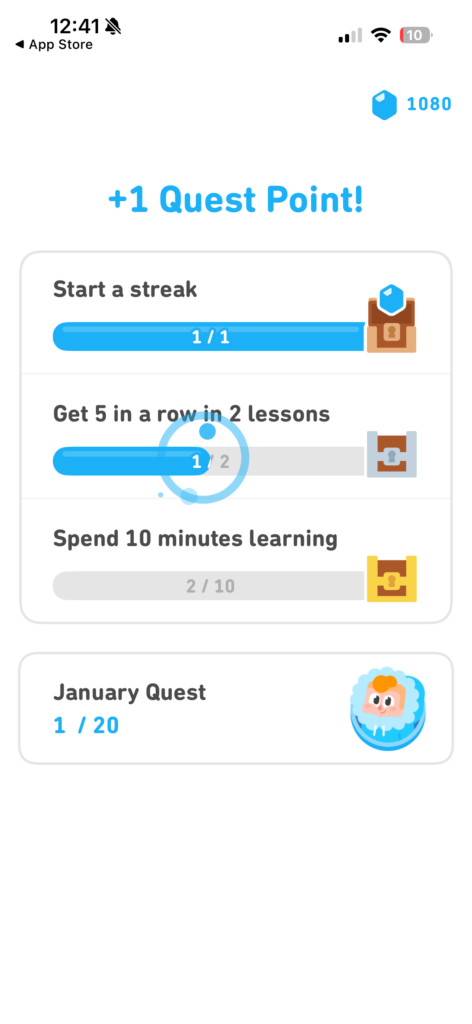
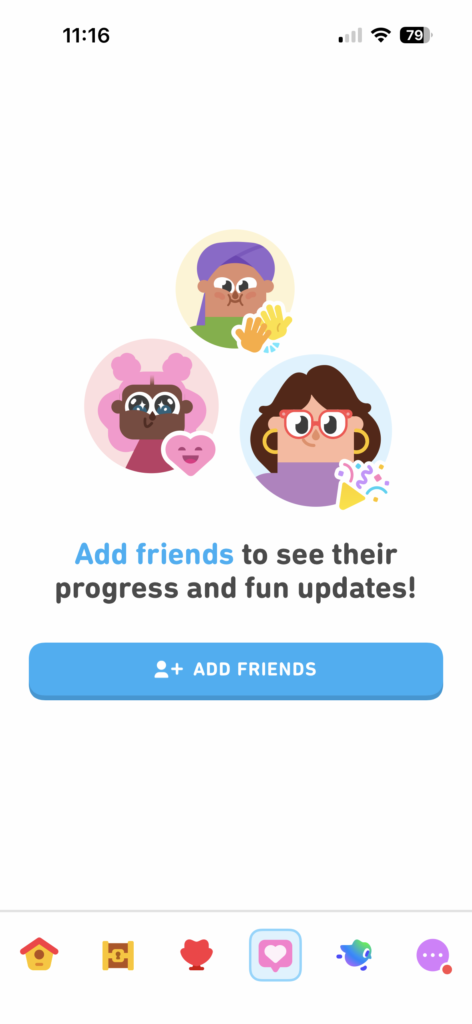
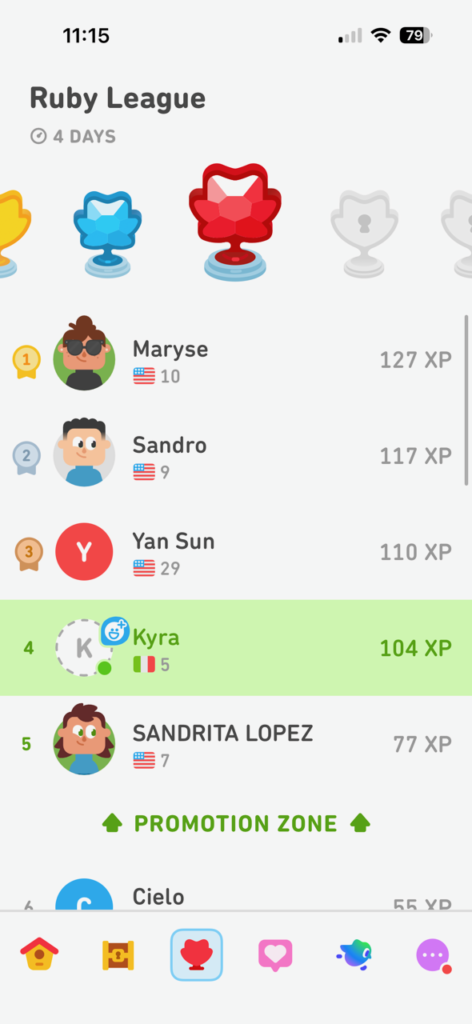
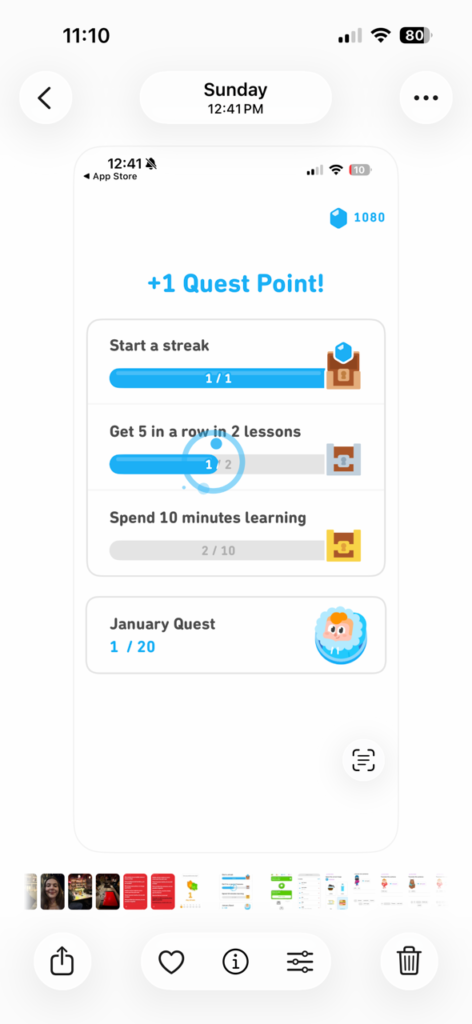
You can see the options to add friends, compete worldwide on a leaderboard, and collect points above.
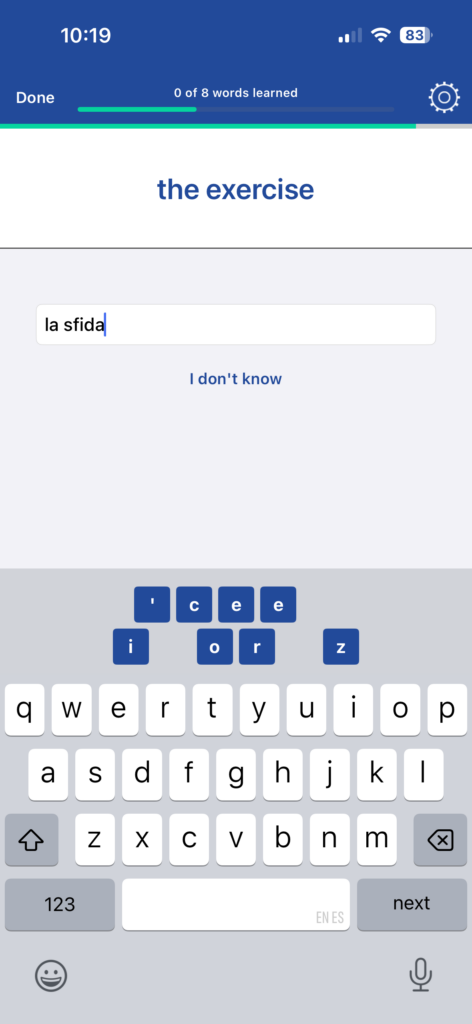
One thing I find challenging about Duolingo is that it asks you to translate new words before telling you what they mean. I am having to depend quite heavily on my Spanish base to translate to Italian. I do appreciate that it makes you listen to, read, write, and speak a word to consider it “learned”.
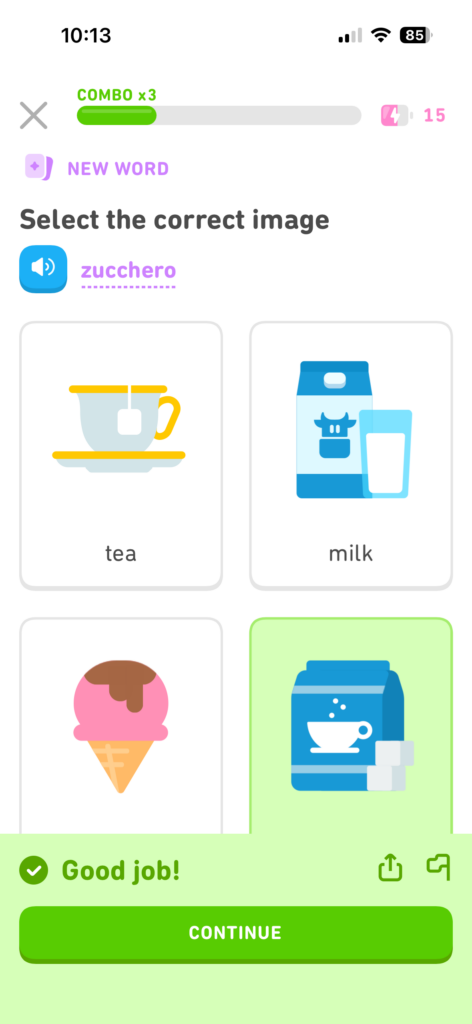
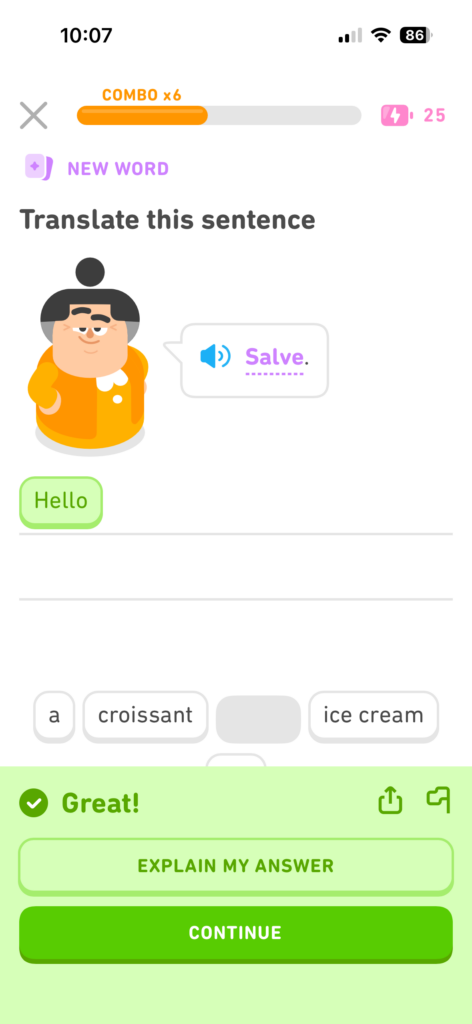
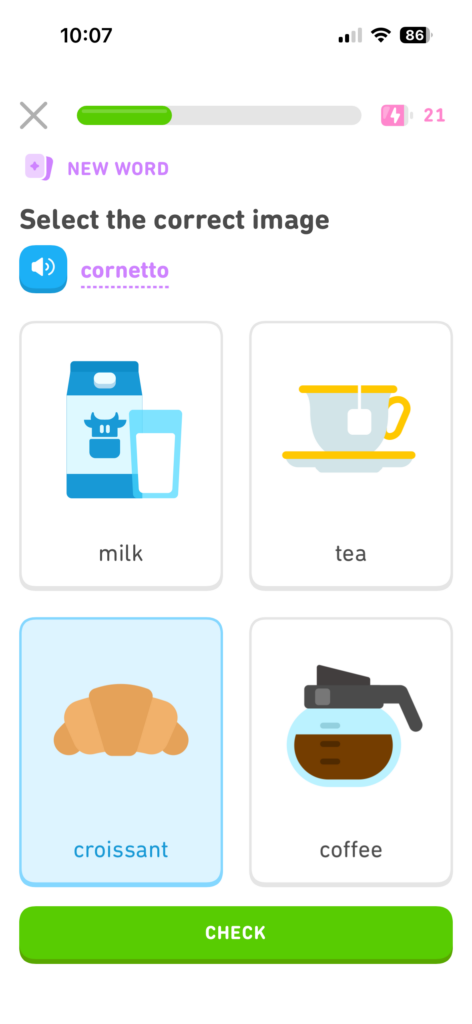
Yabla also shows you videos with words that you have never seen before, and the practice games ask you to spell and speak words that you have not been given a translation for yet.


I appreciate aspects of both apps, but so far, I do find Duolingo to be more of a game than a tool, as I find myself focused on getting the correct answer quickly, so I do not lose points, instead of taking time to practice and master. I enjoy Yabla, but I cannot explore it fully without premium and that it starts you out using complex vocabulary you have not learned. My first impression is that these apps may be better for vocabulary review than Square One language learning.